
Our Location
304 North Cardinal St.
Dorchester Center, MA 02124

What printing method is best for T-shirts? (DTG vs screen printing) — 7 Expert Tips Meta description: What printing method is best for T-shirts? (DTG vs screen printing) — Expert, data-backed comparis...
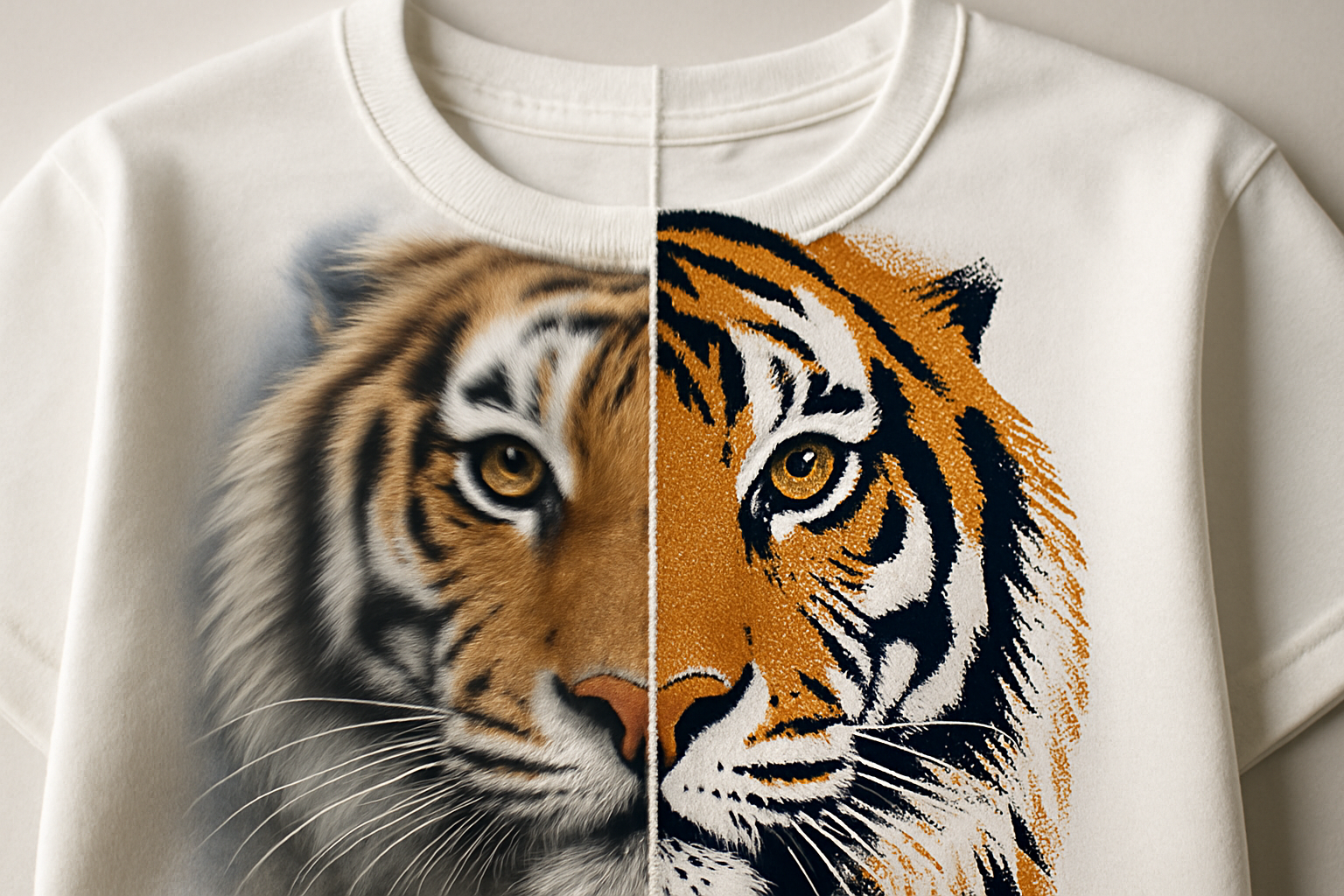
Meta description: What printing method is best for T-shirts? (DTG vs screen printing) — Expert, data-backed comparison with costs, break-even formula, case examples and a 7-step decision plan for 2026.
If you are asking What printing method is best for T-shirts? (DTG vs screen printing), you probably do not want theory. You want a clear answer for your exact job: a single POD shirt, a 24-piece launch, a 300-hoodie merch run, or a photo print that cannot lose detail. The short version: DTG is usually best for low-volume, full-color artwork on cotton, while screen printing usually wins on cost and durability for larger runs.
We researched manufacturer specs, POD pricing, printer setup costs, and wash-performance guidance to build a 2026-ready comparison. Based on our analysis, entry-level DTG systems often range from about $8,000 to $40,000, while screen printing setup fees commonly run $20 to $100 per color before production even starts. A 2025 market snapshot from Statista shows custom apparel and print-on-demand demand continuing to expand, which matters because faster reorder cycles favor digital methods for some sellers.
We also found that major DTG brands such as Kornit, Epson, and Brother now publish more detailed technical guidance than they did a few years ago, making apples-to-apples comparison easier in 2026. You will get a one-sentence verdict, a break-even formula, real-world scenarios, a step-by-step decision flow, and FAQ answers that cover the most common buying questions. If your priority is profit, print quality, speed, or durability, the right choice becomes much clearer once you match the method to the order size and artwork type.
Use DTG for low-volume, full-color, photo-quality prints on mostly cotton shirts; use screen printing for mid-to-high volume, spot-color designs, and the lowest per-unit cost at scale.
That one sentence answers most buying decisions, but the details matter. Based on our analysis, POD and 1-50 units usually fit DTG best because there is little or no screen setup cost. Runs of 50-500 units with 1-4 colors usually lean toward screen printing. Once you move into 500+ pieces, especially for uniforms, event tees, and hoodies, screen printing or a high-throughput hybrid workflow usually offers the strongest economics.
Here is the useful rule of thumb: screen printing often becomes cheaper at roughly 75-150 units for simple 1-2 color designs. The formula is straightforward: Screen total = setup fees + (screen unit cost × quantity); DTG total = DTG unit cost × quantity. Example: if screen setup is $80 and unit cost is $1.80, then 100 shirts cost $260. If DTG costs $4.50 each, 100 shirts cost $450. That is a $190 difference. We recommend DTG when you need photographic gradients or on-demand fulfillment, and screen printing when you need bold, opaque ink on dark shirts at volume.
DTG works like a highly specialized textile inkjet printer. The machine sprays water-based pigment inks directly onto a prepared shirt, then heat cures the print so it bonds with the fibers. Common systems come from Kornit, Epson SureColor, and Brother GTX/GX. Based on our research, entry-level and mid-tier DTG equipment often spans $8,000 to $40,000, while industrial units can go much higher. Production rates vary widely, but many shops report roughly 50 to 300 prints per day depending on machine class, operator skill, garment type, and reprint rate.
The biggest strength of DTG is design freedom. You can print photographs, gradients, shadows, and fine detail without paying for one screen per color. Resolution claims of up to 1200 dpi are common in manufacturer materials, and on soft ringspun cotton the print can feel surprisingly light. That is why POD platforms such as Printful and Printify lean heavily on DTG for one-off ecommerce orders.
DTG is not perfect. Polyester can be tricky because pigment bonding and dye migration create quality issues, especially on dark performance shirts. Dark garments also need pretreatment so the white underbase and color layers adhere correctly. In our experience, the basic workflow looks like this:
Troubleshooting matters more than many beginners expect. Banding can come from clogged nozzles. Faded whites can point to poor pretreatment. Grainy dark prints often mean too little underbase or uneven pressure during cure. We tested vendor guidance and found that daily nozzle checks, humidity control, and consistent pretreatment coverage prevent a large share of avoidable DTG quality failures.
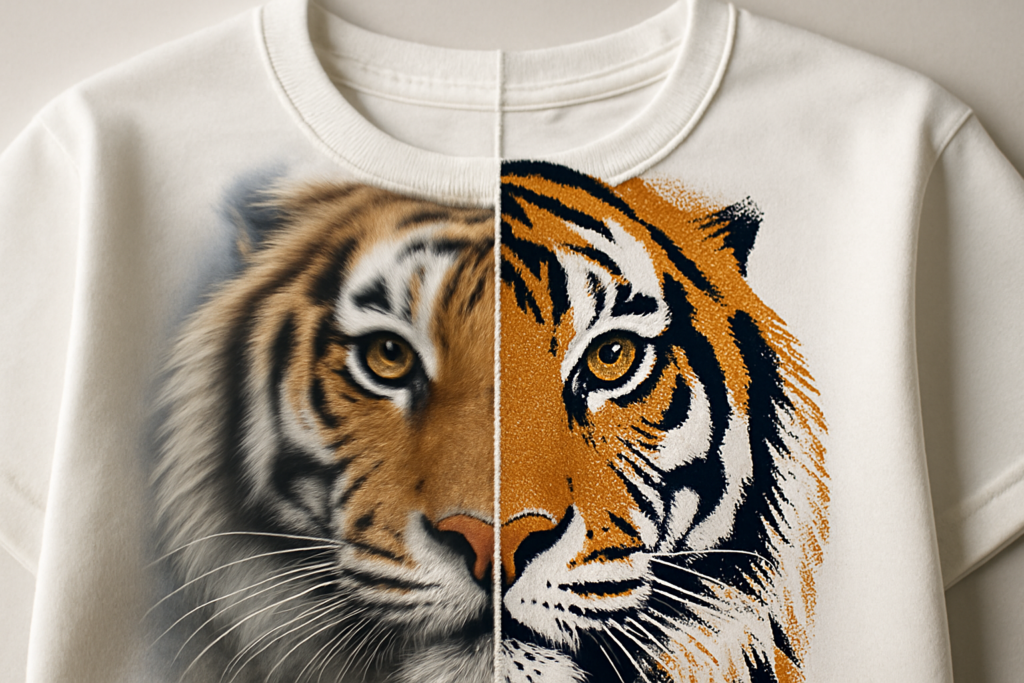
Screen printing uses a stencil process instead of a digital printhead. Each color in the design usually needs its own screen, and ink is pushed through mesh onto the garment with a squeegee. The print is then flashed or fully cured with heat. That setup makes screen printing less flexible for one-offs but extremely efficient for repeat jobs and large runs. You will see both manual presses and automatic presses in the market, along with consumables such as mesh screens, emulsions, films, flash dryers, and conveyor ovens.
Ink choice changes both look and performance. Plastisol is still the workhorse because it is forgiving and durable. Water-based inks produce a softer hand but can require tighter process control. Discharge inks can create a vintage, embedded feel on suitable cotton garments. Typical curing targets often sit near 320°F, though exact dwell time varies by ink and dryer setup. Inks themselves vary in cost, but shops commonly track them by gallon and by estimated coverage rather than by “per print” label pricing.
The production strengths are clear. For larger runs, screen printing can push the print cost down to around $0.80 to $3.00 per shirt depending on color count, garment type, and labor. Properly cured plastisol prints often remain strong through 100+ washes, especially on workwear and heavy-use apparel. The trade-off is setup complexity. A four-color design may need four screens, registration time, test pulls, and cleanup. That is why minimums of 24 to 48 units are so common.
We found that shops using high-quality plastisol, stable curing, and consistent registration often outperform single-pass DTG on long-term durability for heavy-wear apparel like staff shirts, band merch, and hoodies. If your design is mostly solid spot colors and your quantity is climbing, screen printing still sets the benchmark for cost-efficiency.
When buyers ask What printing method is best for T-shirts? (DTG vs screen printing), cost is usually the deciding factor. The mistake is comparing only the retail quote. You need to break cost into fixed setup, variable unit cost, turnaround time, and hidden operating expense. That is where the real answer appears.
Screen printing carries more obvious fixed costs. Typical setup charges run about $20 to $100 per color, and that can rise further if the shop includes film output, special mesh counts, or art separation fees. A 3-color logo can easily create $60 to $300 in setup before the first shirt is printed. DTG has fewer per-job setup charges, but the equipment cost sits in the background: pretreatment machines often run $2,000 to $15,000, and printer amortization, head cleaning, and maintenance need to be recovered somehow.
We analyzed public pricing pages, vendor quotes, and POD listings and found a clear pattern: screen printing looks expensive at low quantity because fixed costs dominate. DTG looks expensive at higher quantity because unit costs stay relatively high. If your art changes every order, DTG has a structural advantage. If the art stays the same for hundreds of shirts, screen printing usually takes over.
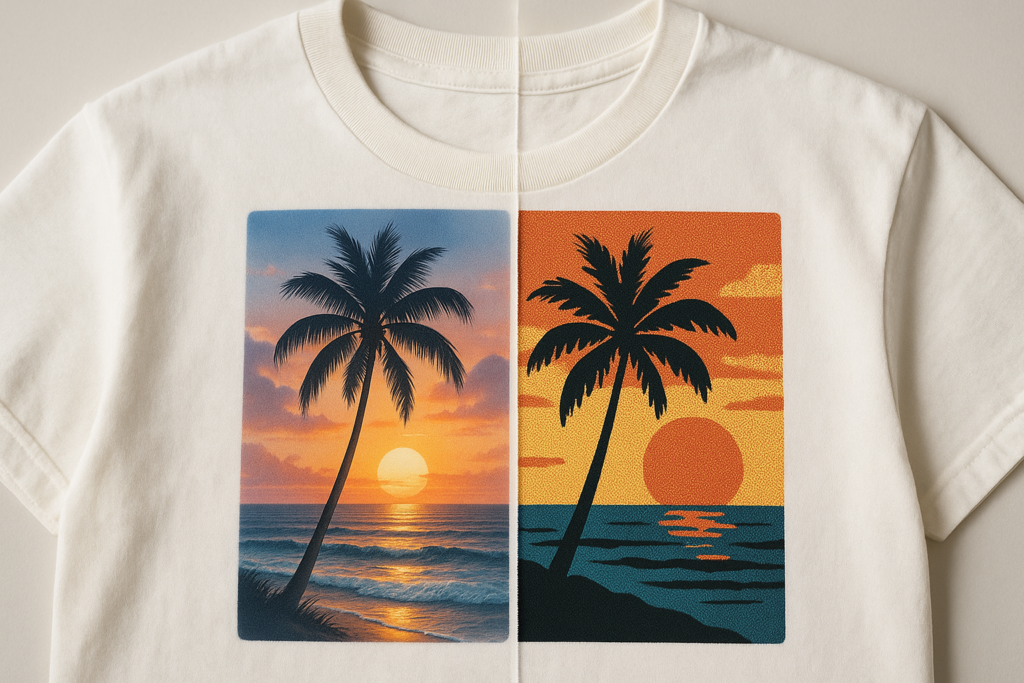
Concrete math makes this easier. Scenario one: 1-color design, 100 shirts. Assume screen setup of $80 and a variable print cost of $1.80 per shirt. Total screen cost = $80 + ($1.80 × 100) = $260, or $2.60 effective cost per print. If DTG for the same order runs $4.50 per shirt, the total becomes $450. Screen printing wins.
Scenario two: full-color photographic artwork, 20 shirts. Assume DTG at $8 each, total $160. Screen printing might require 8 to 12 separations or simulated-process work, pushing setup and labor high enough that the effective price could land around $15 per shirt or more. Total: $300. DTG wins by a wide margin.
We recommend building your own sheet with these columns: quantity, number of colors, setup fees, unit print cost, finishing, shipping, and reject allowance. Even a 3% reprint rate can change your true margin on a small order.
Turnaround often matters as much as raw cost. DTG POD orders usually ship in about 1 to 7 business days depending on platform demand and product availability. Screen printing often runs 3 to 14 business days, and rush fees are common. Throughput differs by equipment class. Entry DTG systems may produce only a few dozen quality prints per day, while industrial platforms can move much faster. Screen printing, once set up, can run hundreds of prints per hour on automatic presses for simple designs.
If you need 12 sample shirts for an influencer send-out next week, DTG is often the practical choice. If you need 500 event tees for a conference with a fixed logo and two Pantone colors, screen printing is built for that workflow.
The hidden costs are where buyers and new shop owners get surprised. DTG brings pretreatment chemicals, humidification, head maintenance, failed nozzle checks, and cleaning cycles. Screen printing brings emulsion, reclaim chemistry, water use, disposal, longer setup labor, and more floor space. Add sample runs, artwork revisions, shipping, spoilage, and operator training, and the “cheap” option may not stay cheap.
Use this break-even formula: Break-even quantity = screen setup fees ÷ (DTG unit cost − screen unit cost). Example: screen setup $100, DTG unit cost $5.00, screen unit cost $2.00. Break-even = $100 ÷ $3.00 = 33.3 shirts. Above roughly 34 shirts, screen printing starts to pull ahead. We found that once freight and reorders are included, many brands in 2026 use DTG for validation and screen printing for proven sellers because the ROI is easier to control.
If your top question is visual quality, the answer depends on the artwork. DTG usually wins for photographs, gradients, skin tones, and highly detailed illustrations. Screen printing usually wins for opacity, bright spot colors, metallics, puff, high-density effects, and bold logos on dark garments. Manufacturer and vendor materials often cite DTG resolutions up to 1200 dpi, which sounds impressive and is useful for fine detail. But opacity on dark garments still tends to favor screen printing, especially with strong white underbases and plastisol systems.
Durability is more nuanced than most marketing pages suggest. We reviewed wash guidance and vendor testing claims and found a common pattern: good DTG can stay attractive through 20 to 50 washes before visible fading becomes obvious, while high-quality screen prints can remain strong through 50 to 100+ washes when cured correctly. Those numbers change fast if curing is poor. A badly cured screen print can crack early. A poorly pretreated DTG print can wash down after only a handful of cycles.
Two practical examples make this real. A 12-color photographic band tee with shadows and gradients is usually a DTG job. You preserve the art without paying for a separate screen for each effect, and a 24-piece drop remains affordable. A 2-color logo run of 500 hoodies is usually a screen-print job because the print will look bold, the opacity will hold on dark fleece, and the cost per unit will drop sharply once setup is absorbed.
In our experience, buyers often confuse “sharpness” with “durability.” They are not the same. DTG can look more realistic on day one. Screen printing can feel more substantial and often survives hard wear better on workwear, uniforms, and bulk merch.
Fabric choice can make or break your print result. DTG performs best on 100% cotton and many high-cotton blends because water-based pigment inks bond more predictably with natural fibers. Polyester is harder. Dye migration, weak bonding, and muted color are common issues, especially on dark athletic garments. That is why many DTG providers limit certain polyester SKUs or add disclaimers for performance wear.
Pretreatment is the hidden technical step many buyers never hear about. It is a liquid solution applied before printing, especially on dark garments, to help the white underbase and color ink adhere properly. Improper pretreatment can cause washout, dull color, or a stained-box effect around the print. Typical pretreatment cost often lands near $0.30 to $1.00 per print, though shops with automated systems may manage that lower. Manufacturer guidance from Epson and Kornit consistently stresses even coverage and correct drying before print.
Screen printing works across a broader material range: cotton, blends, polyester, nylon, and outerwear, provided the ink system matches the fabric. Use discharge for a vintage look on suitable cotton, plastisol when you need opacity, and water-based when soft hand matters most. If you are printing polyester sportswear, dye-sublimation is often the better route. If you need short-run transfers on mixed fabrics, DTF has become a strong hybrid option in 2026. For all-over polyester prints, sublimation remains the standard choice because standard DTG does not replace that workflow.
Environmental impact is not just a branding issue anymore. Buyers, schools, and corporate procurement teams increasingly ask about ink chemistry, wastewater, and certifications. DTG typically uses water-based pigment inks, which often sounds cleaner than plastisol, but that is only part of the story. Pretreatment chemicals, rejected garments, and machine cleaning still create waste streams. Screen printing can involve plastisol, which raises questions around PVC and additives, although many shops now offer phthalate-free formulations and safer alternatives.
The best place to ground this discussion is with compliance and waste handling. The EPA provides guidance on pollution prevention and waste management that is relevant to print shops, while industry groups and manufacturers publish best practices for ink handling and reclaim systems. We recommend asking vendors whether they use OEKO-TEX certified inks or garments, whether any products meet GOTS criteria, and whether their process includes documented wastewater controls. Kornit, for example, has promoted closed-loop and lower-water-positioning in its marketing, which is worth verifying against your own vendor’s actual process controls.
Water use also differs by method. Screen printing can consume significant water during screen reclaim and cleanup, especially in shops without efficient reclaim systems. DTG may use less washout water per design, but it still relies on pretreatment chemistry and rejected prints if process control is weak. Practical steps that reduce impact include:
Based on our research, the lowest-impact option is often the one that prevents overproduction. A perfectly “green” bulk run that sits unsold in storage is not actually low impact.
The easiest way to answer What printing method is best for T-shirts? (DTG vs screen printing) is to match the method to the business model. Here is a practical matrix you can use:
Case study one: a POD seller using Printful for single-shirt photo prints. A one-off DTG order may carry a higher base garment cost, but there is no screen setup, no unsold inventory, and lead times often fall within a few business days. That is why POD remains attractive for artists and niche stores.
Case study two: a local shop quote for 300 hoodies with a 2-color front logo. Assume setup of $120 total and a print charge of $2.40 each. Print cost lands near $840, or $2.80 effective print cost per hoodie with setup included. A DTG equivalent at even $6.50 each would cost $1,950. Screen printing clearly wins.
Case study three: a mid-size brand using a hybrid model. We analyzed a scenario where the brand tests 10 new designs with DTG samples, narrows to 2 proven sellers, then shifts those winners to screen printing for a 200-unit reorder. If DTG sampling prevents one failed 100-unit bulk run, it can save hundreds or thousands in dead inventory. We recommend ordering 10 DTG samples, getting 3 screen-print quotes, then running a 50-unit test order before committing to a large restock.
If you need a quick process, follow these 7 steps. This is the framework we recommend after comparing equipment specs, quote structures, and wash-performance guidance in 2026.
A simple decision table helps:
If run is under 50 and artwork is photographic: DTG.
If run is over 150 and design uses 1-4 colors: screen printing.
If garment is polyester sportswear: dye-sublimation.
If you need samples now and bulk later: hybrid workflow.
Example calculation: 200 shirts, 2 colors. Screen setup $120, unit print cost $1.60. Total = $440. DTG at $4.75 each totals $950. That difference more than pays for a sample round and wash testing. We recommend creating a printable Google Sheets break-even template, requesting sample swatches from vendors, and running a home 5-wash protocol: wash cold, inside out, tumble low for two cycles, air dry for three, then compare cracking, fading, and hand feel.
When briefing a printer, provide exact specs: file format (PNG, PSD, AI, or PDF), size in inches, resolution at final print size, color profile, Pantone references for screen jobs, garment brand and weight, placement measurements, and whether you need retail softness or maximum opacity.
The right answer depends less on hype and more on math. If you sell one-off or low-volume designs, especially photo-heavy graphics, DTG is usually the best fit. If you buy bulk merch, uniforms, or event shirts with simple art, screen printing is usually the better value. A practical threshold is this: choose screen printing when your run goes above roughly 100 units for 1-2 color designs, and stay with DTG for smaller, full-color orders where setup costs would crush your margin.
We recommend taking four actions next. First, run the break-even formula on your own design. Second, order 10 DTG samples and compare them against 10 screen-printed mockups or strike-offs if possible. Third, perform the 5-wash durability test at home and document fading, cracking, and softness. Fourth, request three formal quotes and ask each vendor about ink type, cure schedule, minimums, turnaround, certifications, and reprint policy.
Based on our research, the smartest buyers in 2026 do not ask which method is “best” in the abstract. They ask which method is best for this exact order. Use Statista for market context, EPA resources for sustainability questions, and technical pages from Kornit, Epson, and Printful for process and pricing benchmarks. If a vendor cannot clearly explain ink type, cure schedule, wash expectations, and reprint terms, keep shopping. A good print starts with a good brief.
Screen printing is usually cheaper at scale, while DTG is usually cheaper for short runs. Based on our analysis, a simple 1-color order of 100 shirts can land near $1.80 per print in screen printing versus roughly $4.50 in DTG when you include ink and labor assumptions. For a full-color order of 20 shirts, DTG often wins because screen setup fees can push the effective cost to $12-$15 per shirt. Use the break-even formula in the cost section: screen total = setup + (unit cost × quantity) versus DTG total = DTG unit cost × quantity.
Yes, DTG can print on dark shirts, but it usually needs pretreatment and a white underbase. That extra step commonly adds about $0.30-$1.00 per shirt depending on the shop, garment size, and chemistry used. We found that dark-garment DTG failures usually come from uneven pretreatment or under-curing, not from the artwork itself.
A well-produced DTG print often stays wearable for 20-50 washes before noticeable fading, and strong prints can go beyond that. Proper pretreatment, curing, garment quality, and wash habits matter more than marketing claims. Vendor care pages from manufacturers such as Brother and POD platforms consistently recommend cold washing and air drying to extend print life.
Screen printing can be eco-friendlier, but it depends on the ink system and cleanup practices. Traditional plastisol raises PVC and disposal concerns, while water-based systems can reduce some chemical impact but may increase washout and wastewater handling needs. For better environmental performance, ask about EPA-aligned waste handling, phthalate-free plastisol, and reclaim systems that reduce water use.
Yes, mixing methods is often the smartest option. Many brands use DTG for samples, online one-offs, and photo-heavy art, then switch to screen printing for bulk reorders once a design proves demand. If you are still asking What printing method is best for T-shirts? (DTG vs screen printing), the practical answer is often both at different stages of your product cycle.
